The Roll Up: December 16, 2025TL;DR: As word of the shooting at Brown University in Providence broke on Saturday, social media erupted with commentary on how another school shooting could have happened again. Heavy traffic broke down into social and political questions about how these shootings happen, the shooter's motives and what can be done to prevent more shootings--with an added element of conspiracy theories and hate. Here's what we know: |
 |
|
Despite the frequency of school shootings in the United States, each generates a good deal of traffic on social media. The Brown University shootings were no exception. Traffic quickly picked up as word of the shootings went out, with users posting and sharing news coverage and their opinions on the tragedy.
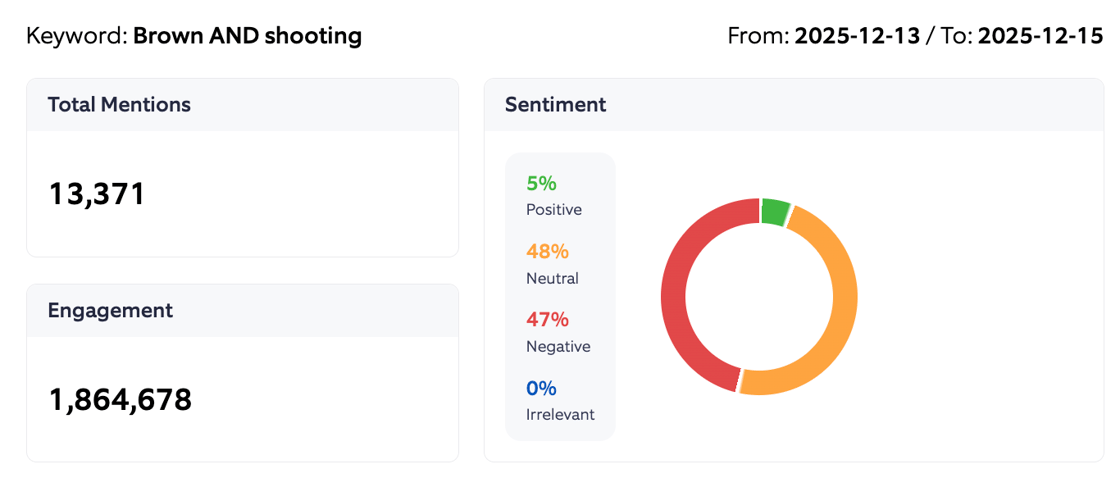
Rolli IQ analysis shows a predictable pattern of responses to the shooting with about half expressing negative sentiments for what happened. Many posts were neutral, mainly relaying the facts as they trickled out from the scene. The volume of mentions and engagements was quite high, racking up nearly two million engagements in just three days. |
|
Rolli IQ Sentiment Summary for "Brown" and "shooting", Dec. 13-15, 2025 |
 |
|
But the volume of interaction on the topic is not the most interesting detail unearthed by Rolli IQ. Using its Topic Tree function, it is possible to break down posts by subject matter to see exactly what was driving all this engagement.
Rolli IQ broke down engagement into five broad categories: Mass Shooting Incident Details, Community and Emotional Impact, Political and Social Reactions, Comparative and Contextual Analysis and Conspiracy Theories and Misinformation. The first grouping, incident details, are simply that--the posting of what is known about what happened--and not that interesting to analyze further. But the other categories tell us a lot about how the public is processing this latest gun tragedy.
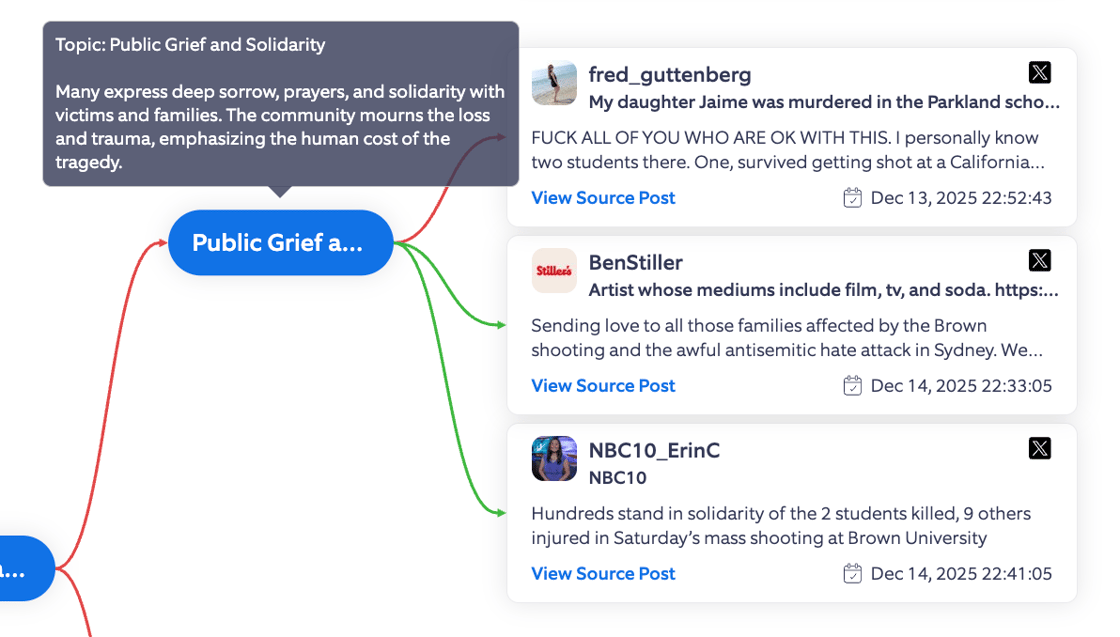
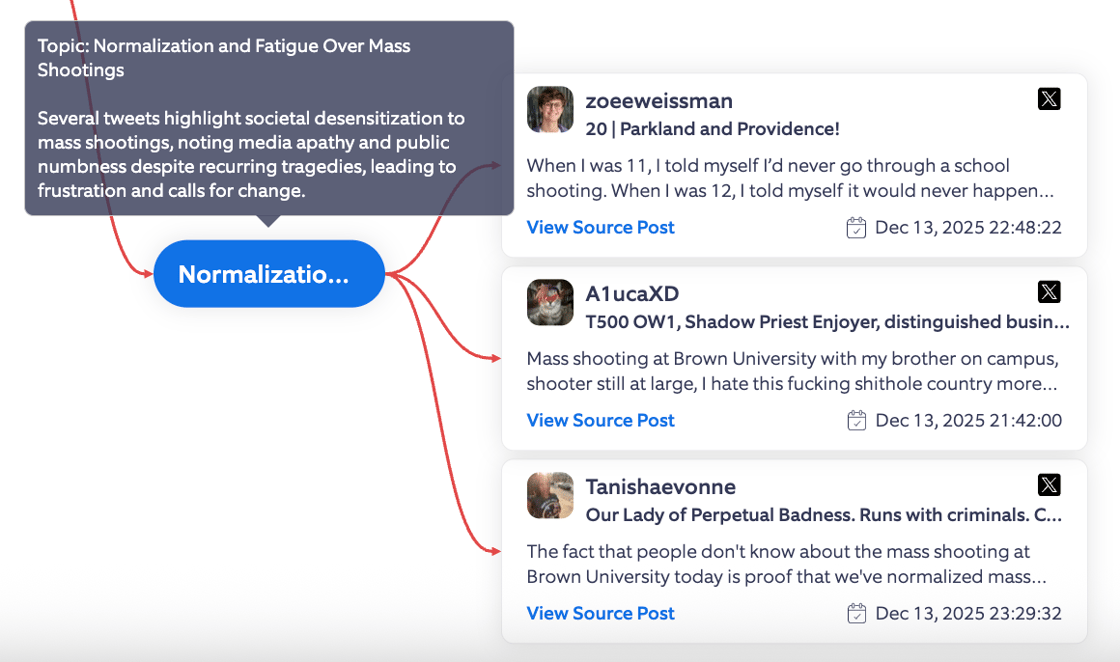
Starting with Community and Emotional impact, Rolli IQ Topic Tree breaks it down further into two subcategories: Public Grief and Solidarity and Normalization and Fatigue over Mass Shootings. Under the grief heading, the most engaged posts range from anger that this has happened again to an outpouring of sympathy for those affected by the tragedy. |
 |
|
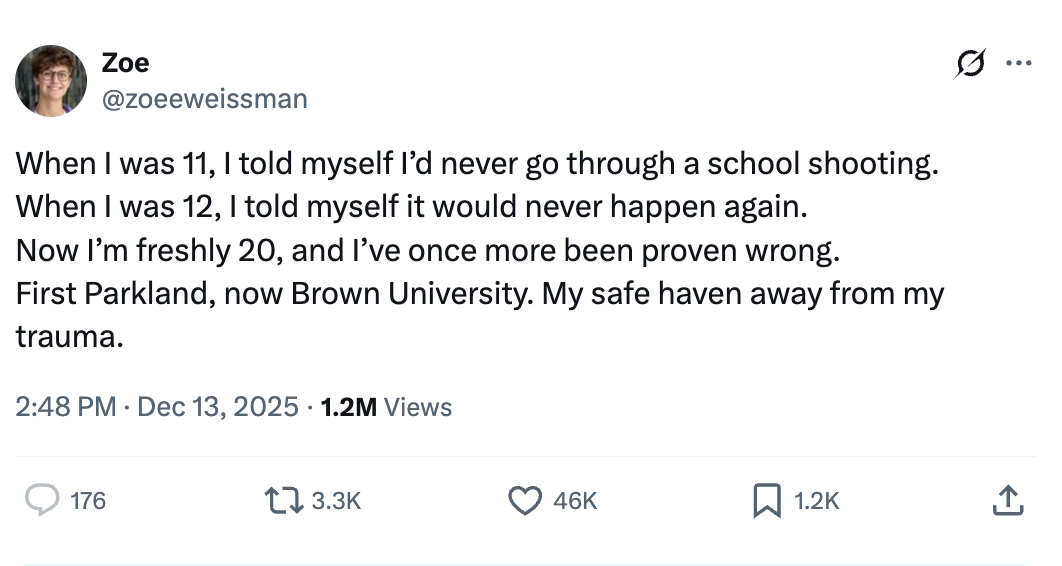
The normalization discussions bring up perhaps the most horrifying aspect of this latest mass shooting. One user, @zoeeweissman, shares her despair over being involved in two school shootings--all by the age of 20. |
 |
 |
|
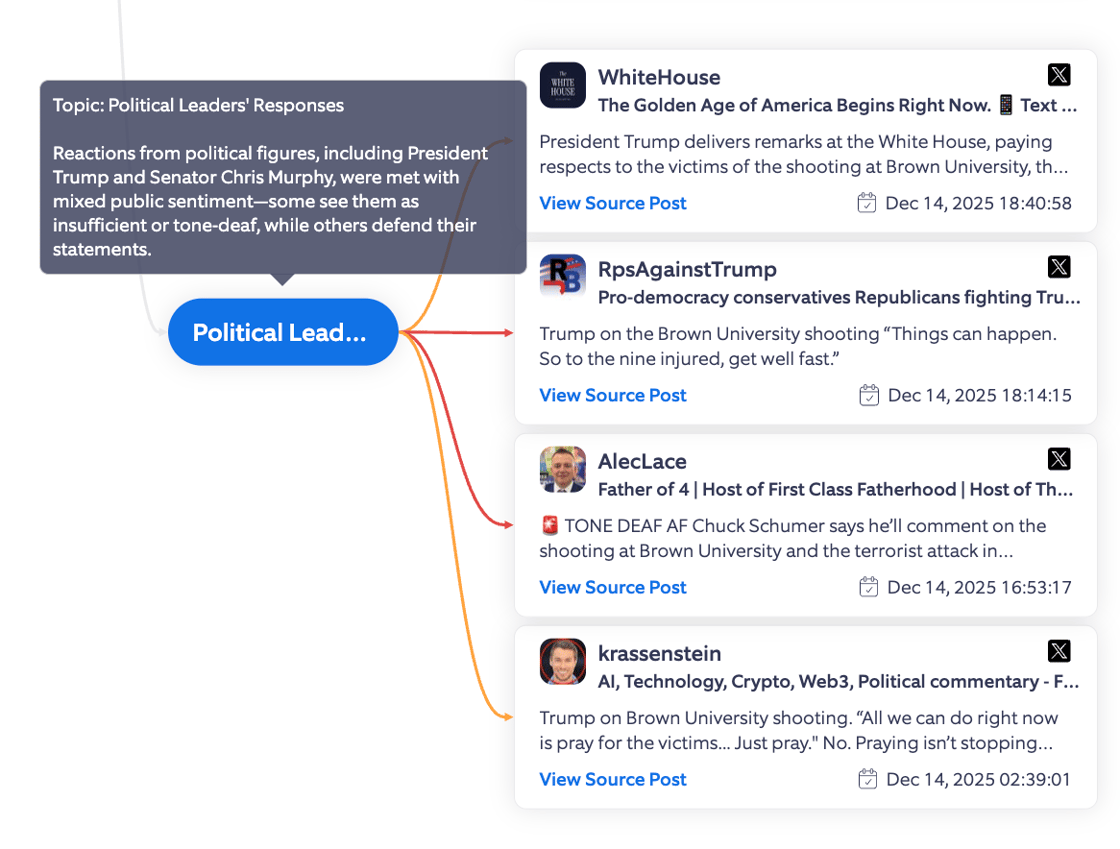
Rolli IQ breaks down the Political and Social Reactions category into four subcategories: Media Coverage and Transparency Criticism, Gun Control Debate, Political Targeting and Extremism Claims and Political Leaders' Responses. Across these subcategories, battles rage over alleged media cover-ups, the effectiveness of gun control and attacks on politicians for weak statements that don't address the problem.
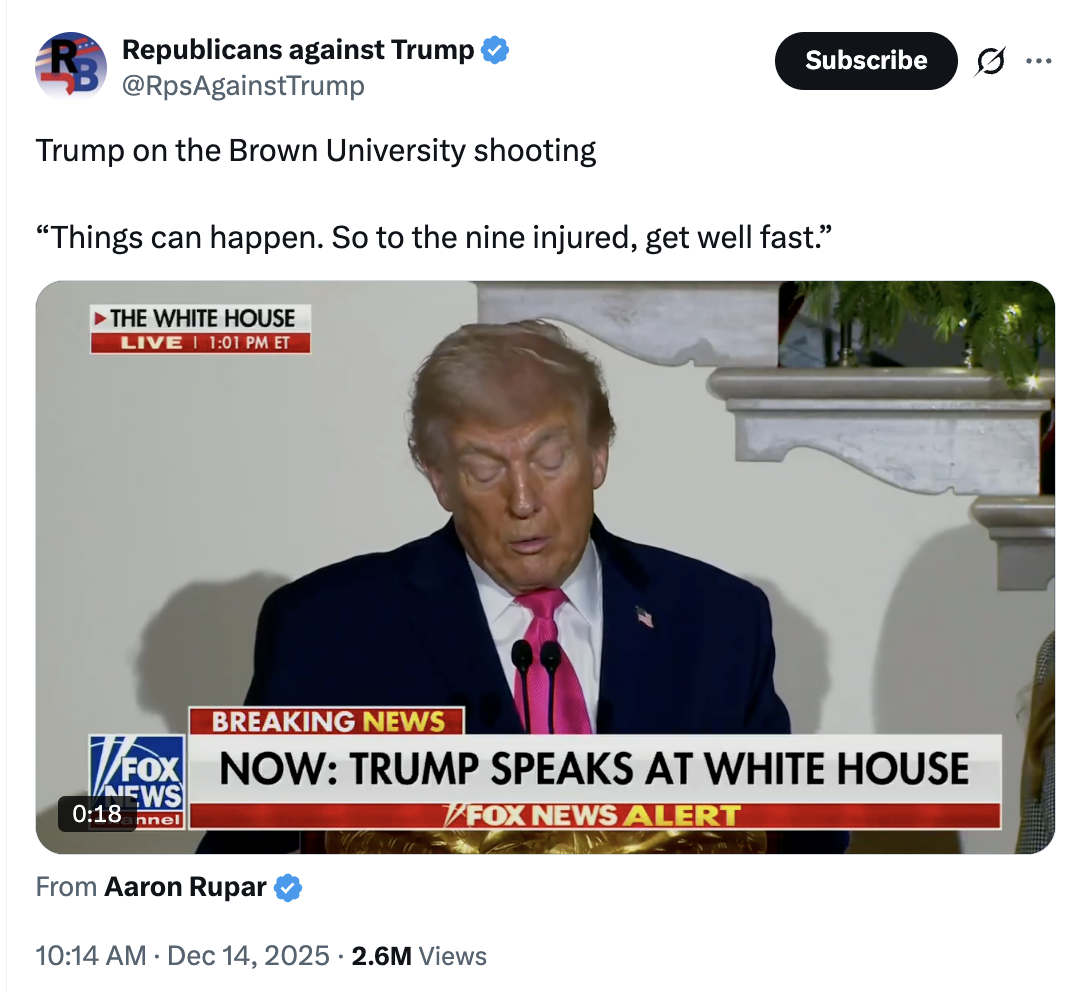
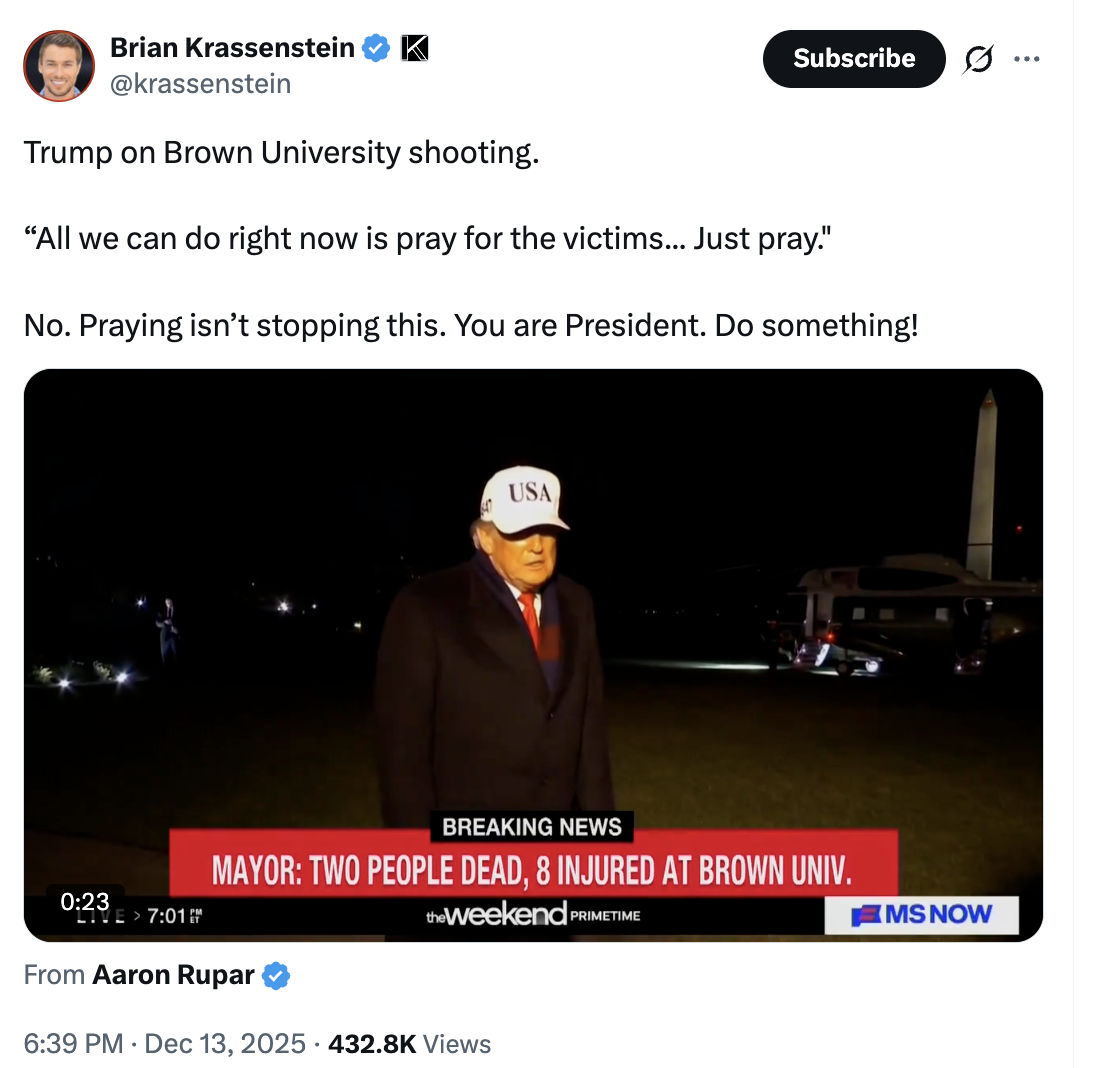
That last group of posts was focused mostly on President Trump, whose comments included the phrase, "things can happen," which angered many, being seen as an admission that the administration won't try to stop mass shootings. |
 |
 |
 |
|
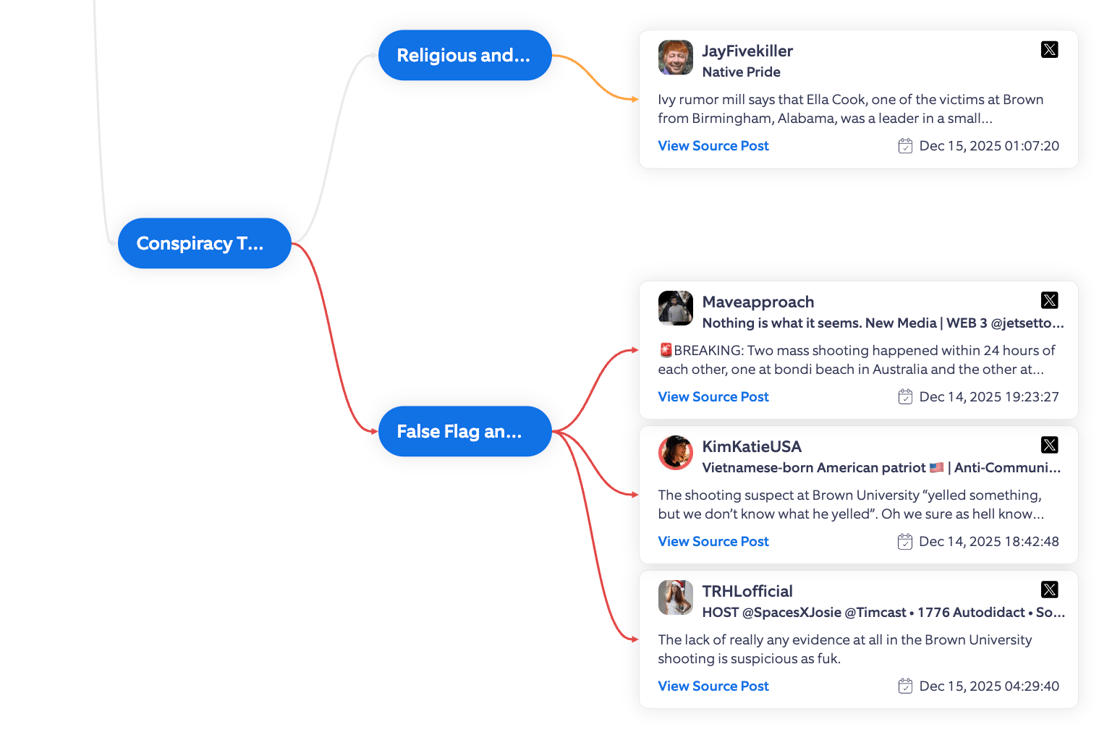
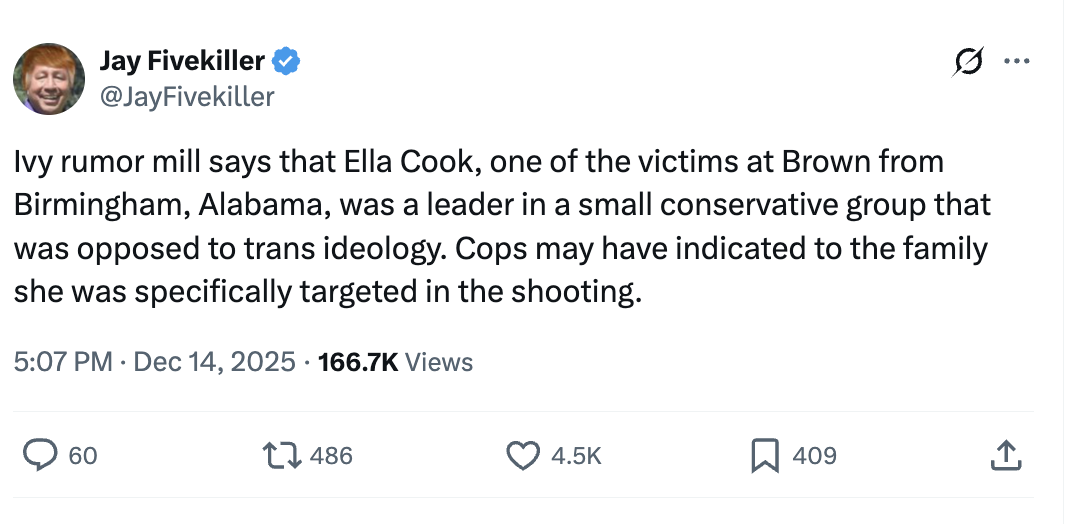
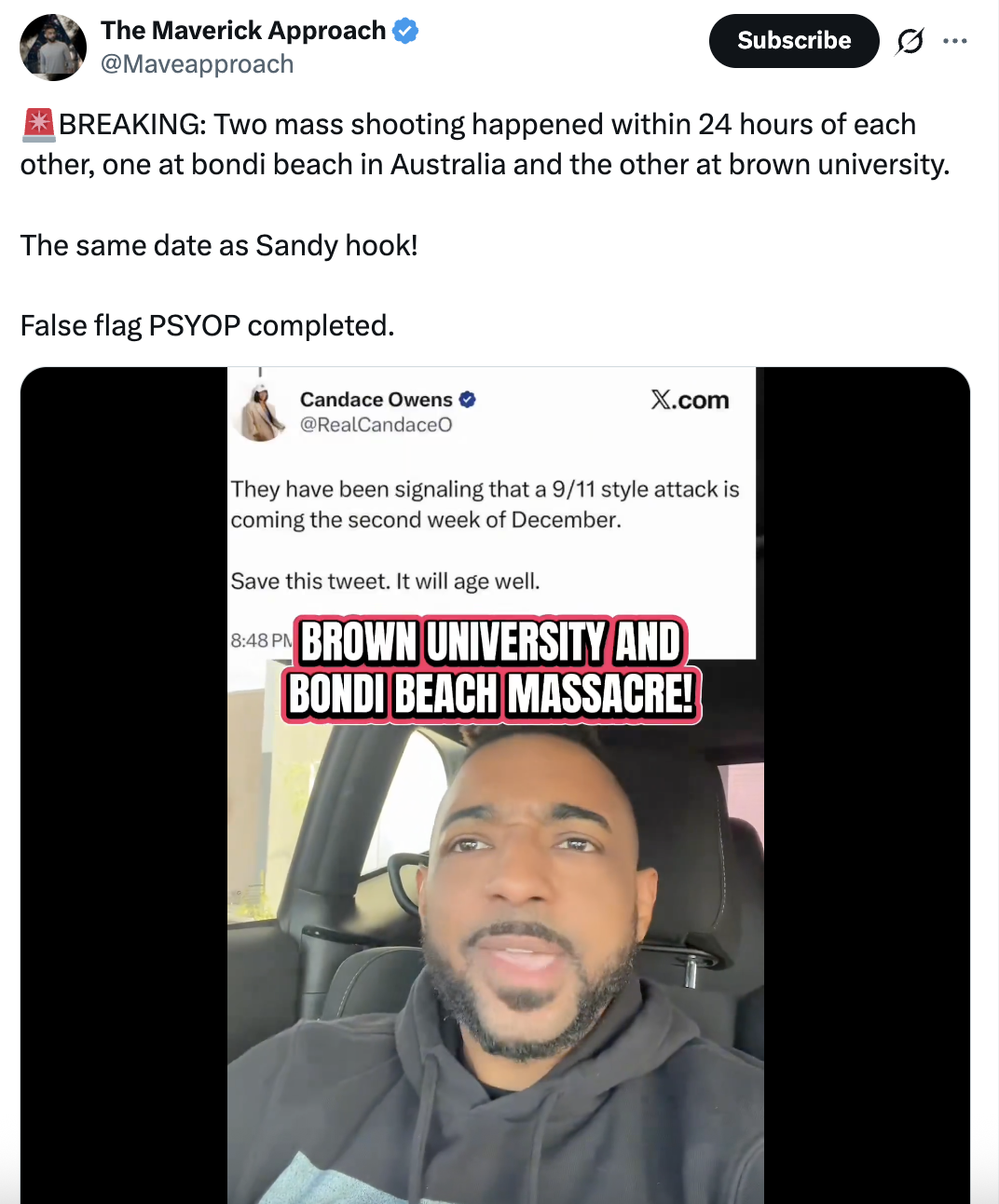
Rolli IQ analysis shows many posts peppered with comments that allege various conspiracies other charges about the shooter and what his motive might have been, but the category Conspiracy Theories and Misinformation cleanly organizes some of the most shared posts into two subcategories: Religious and Ethnic Motive Speculations and False Flag and Cover-up Allegations. These posts quickly asserted that one of the shooting victims at Brown was the student leader of an on-campus conservative group, suggesting an anti-conservative motive to the shootings. Others, though, suggested the shooter was a Muslim and the attack was religiously motivated--all without any evidence that either of these assertions is true. |
 |
 |
 |
|
It's important to point out this mass shooting coincided with the weekend Bondi Beach shooting in Australia, giving each event a boost on social media and bringing out far more people to make a connection between the two shootings which, as of this writing, appear to be unconnected. |
|
The bottom line is that the analysis using Rolli IQ to look at online posts about the shootings at Brown University shows breaking down the posts by category gives a much clearer picture of not only the grief being shared online, but the rampant spreading of misinformation and speculation that surrounds any gun tragedy. |